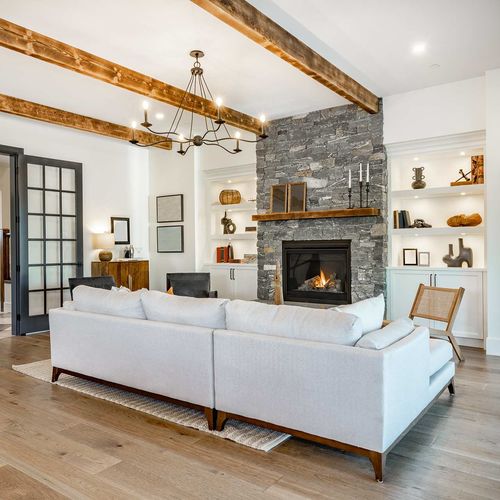


About 88 to 90 percent of older adults want to stay in their own home as they age — but only around 10 percent of homes in the U.S. are actually set up to support that. That gap matters, and if you've been quietly wondering whether your home will still work well for you five or ten years from now, you're not alone in that. The question isn't really about whether you love your home, because most people do. It's more about whether your home can genuinely support the life you want going forward — the daily routines, the independence, the safety, and the connections that make life feel full. This isn't a push to sell or a case for staying put. It's a practical look at a decision that deserves more than a gut feeling or a rushed conversation after a health scare. The goal here is to help you think through the real factors before circumstances start making the choice for you. Things like how well your home functions day to day, what modifications might cost, how close you are to the people and care you'd need, and what your finances actually allow. Looking through a straightforward framework covering daily function, long-term costs, support systems, lifestyle goals, and future care needs, so you can weigh your options with more clarity and less pressure. So what does it actually take for a home to support you well through the years ahead?
Why This Decision Is Easier Before It Feels Urgent
The timing of this decision matters more than most people realize. Those who take time to assess their housing situation before any health changes or care needs arise end up with far more options, far more say in the outcome, and far less pressure on themselves and the people they love. A rushed decision made after a fall or a sudden diagnosis rarely reflects what someone actually wants, it reflects what's available at that moment.
The numbers behind this are worth sitting with. According to AARP, 95 percent of adults 55 and older consider staying in their own home a meaningful goal for the years ahead. At the same time, 93 percent of adults 65 and older are already living in their own home or apartment, which means this isn't a niche concern — it's one of the most common situations older adults face. The gap between wanting to stay and having a home that can genuinely support that is where the real planning work happens.
Deciding before circumstances force the issue comes with real, practical advantages.
- More financial flexibility — when you're not under pressure, you can budget for modifications gradually, compare costs across contractors, and explore funding options like home equity or local assistance programs without rushing
- More time to assess care and services — the National Institute on Aging notes that you can "learn about home-based care and other services in your community and find out what they cost" well before you actually need them, which leads to better decisions.
- More control over the outcome — as the NIA puts it, "planning ahead allows you to make important decisions while you are still able," which means your preferences, not your circumstances, drive the direction
Shifting the core question from "can I stay?" to "will this home still support the life I want in five to ten years?" changes the entire conversation. The first question is about the present. The second is about whether your home can keep up with the way your needs, routines, and priorities will naturally shift over time. That's the question this article is built around — walking through the factors that actually determine whether staying makes sense, from how your home functions day to day to what your finances allow and who's in your corner when you need support.
Ask Whether Your Home Still Fits Your Next Chapter
Before any contractor gets called or any real estate listing gets browsed, the most useful thing you can do is take an honest look at whether your current home actually works for the life you want to be living in the years ahead. This self-assessment isn't about talking yourself into staying or out of it. It's about gathering the right information so that whatever direction you choose, it's grounded in something real.
Daily Function
The physical layout of your home tells you a lot about how well it can support you long-term. Right now, climbing the stairs to reach the bedroom or doing laundry in the basement might feel manageable, but the question worth sitting with is whether that will still be true five or ten years from now. Think through the entry points to your home, the bathroom setup, where the bedroom sits in relation to everything else, and how accessible those spaces are on a difficult day — not just a good one. A home where the main bedroom, a full bathroom, and the laundry are all on one level is a very different situation from one where daily routines require navigating multiple floors.
Financial Reality
Keeping a home running costs more than most people expect, and that gap tends to widen over time. Ongoing maintenance, property taxes, insurance, and unexpected repairs all add up — and that's before factoring in any modifications needed to make the home safer or more accessible. Accessibility upgrades such as widening doorways, installing a roll-in shower, adding a stair lift, or building a ramp can sometimes reach $100,000 depending on the scope of work. That figure makes it worth sitting down and genuinely comparing what adaptation would cost against what a move might cost. Neither path is automatically cheaper, but understanding the numbers specific to your home removes a lot of the guesswork.
Support and Location
Where your home sits geographically matters just as much as what's inside it. Having family or close friends within a reasonable distance, access to healthcare providers you trust, reliable transportation options, and a community where you feel connected, these aren't extras. They're the infrastructure that makes independent living sustainable. A home that feels right on the inside can still create real strain if the nearest hospital is 45 minutes away or if the people you'd call in an emergency live hours from you. Luckily Montrose, Delta and Olathe have medical services near by.
Lifestyle Fit and Emotional Attachment
There's also the question of whether this home still matches the way you actually want to spend your time. Less maintenance, more walkability, closer proximity to social activities, or simply a smaller space that's easier to care for — these are all legitimate reasons to reconsider a home that once fit perfectly. Separating that practical question from the emotional weight of a home you've loved for decades is genuinely hard, and it's okay to acknowledge that. Honoring what a home has meant to you and honestly assessing whether it still serves you well are two things that can exist at the same time. One doesn't cancel out the other. The best time to think about how to age in place is before you need a lot of care.
When Staying Is Still the Right Move
All the self-assessment in the world only matters if it leads somewhere useful, and for many people, it leads to a clear and well-supported case for staying put. When the home, the finances, and the people around you genuinely line up, staying isn't just an emotional preference. It's a practical one.
Here are the signs that staying makes real sense for your situation.
- The home works mostly on one level, or can get there without major reconstruction. A bedroom, a full bathroom, and the kitchen all accessible without stairs is a strong foundation. Widening a doorway, adding grab bars, or converting a tub to a walk-in shower are all manageable changes that don't require gutting the structure. The more a home can adapt through targeted modifications rather than full-scale renovation, the more realistic long-term living there becomes.
- Your budget can carry both the present and the future. This means covering regular upkeep, setting aside funds for modifications as needs shift, and having room for paid help down the line, whether that's a part-time caregiver, a home health aide, or a housekeeping service. If the numbers work without stretching too thin, that's a meaningful green light.
- The people and services you'd need are genuinely close by. Family members within a short drive, a primary care doctor you've seen for years, a pharmacy, reliable transportation, and community programs through organizations like the local Area Agency on Aging, these aren't nice extras. They're what makes independent living at home sustainable when things get harder.
- The plan has specifics behind it, not just good intentions. Staying works when there's an actual plan, such as contractors identified, costs estimated, conversations had with family about what support might look like. "We'll figure it out" is not a plan. A written list of modifications needed, a realistic budget, and a clear sense of who does what if care becomes necessary, that's a plan.
- The home carries real meaning that contributes to your wellbeing. "Nine times out of 10, people want to stay in their home as they age," says Dr. Hall of Cleveland Clinic. "That's where they've spent a good part of their life and made memories. That's where they're more comfortable." That comfort is legitimate and worth factoring in — particularly because familiar surroundings can reduce confusion and support cognitive stability as people grow older.
- Technology can fill the gaps that the home currently leaves open. Stairlifts, voice-activated lighting through devices like Amazon Echo or Google Nest, medication reminder systems, and smart home monitoring tools like medical alert systems from companies such as Life Alert or Bay Alarm Medical can meaningfully extend how long someone lives safely and independently at home.
Staying works best when the desire to remain is matched by a home that can genuinely keep up. One where the layout, the budget, the surrounding support, and the available tools all point in the same direction.
What Aging in Place Will Realistically Require
Deciding to stay is one thing, making that work over the long haul is another. A home that feels perfectly comfortable right now can quietly become harder to navigate as physical needs shift, and the gap between "I want to stay" and "my home actually supports that" tends to close faster than most people expect. Getting there takes real money, deliberate changes, and a willingness to think practically about what daily life will look like years from now.
Prioritize the Changes That Improve Daily Living
The modifications that make the biggest difference aren't always the most expensive ones. A flush entryway with no step up from the driveway, grab bars anchored properly in the shower and beside the toilet, and slip-resistant flooring throughout the main living areas address the situations that most commonly lead to injury at home. Better lighting in hallways and stairwells, wider doorways that can accommodate a walker or wheelchair, and a bathroom layout that doesn't require stepping over a tub ledge — these are the changes that protect independence in a real, day-to-day way. Moving the bedroom and laundry to the main floor, if that's structurally possible, removes a whole category of daily risk. None of these require a full gut renovation. A certified aging-in-place specialist, or CAPS, can walk through a home and identify which targeted updates will carry the most weight for safety and function.
Phase Improvements Before They Become Urgent
The smartest time to start on these changes is well before any specific health event makes them feel urgent. Waiting until after a fall or a new diagnosis narrows your options considerably, both in terms of timing and cost. Getting written estimates from contractors or CAPS-certified professionals now gives you real numbers to work with, and those numbers often surprise people. A bathroom conversion that sounds straightforward can run anywhere from a few thousand dollars to well over $15,000 depending on the scope and your home's existing layout. Without actual quotes, it's easy to underestimate what adaptation will cost, which can leave a family scrambling to cover expenses they didn't plan for.
Count the Full Cost of Staying
Beyond modifications, the ongoing costs of keeping a home running deserve honest attention. Roof repairs, HVAC servicing, landscaping, and general upkeep don't pause as you get older, and the physical capacity to handle those tasks personally often decreases while the cost of hiring help increases. A lawn care service, a handyman on retainer, or a part-time home aide all add real monthly expenses that should be factored into any long-term budget. Reliable high-speed internet also belongs in that budget — 76 percent of adults 50 and older consider it a priority, and for good reason. Virtual medical appointments through telehealth platforms, remote monitoring tools, and connected safety devices like fall detection systems all depend on a stable connection. These aren't optional extras for people committed to living independently at home.
Treating a home as livable, not just lovable, is what separates a well-supported aging-in-place plan from one built on optimism alone.
When Moving May Protect Your Independence
Staying put only makes sense when the effort, expense, and compromise required don't outweigh what you're actually getting in return. For some people, the honest math tips the other way, and choosing to move isn't giving up on independence, it's actively protecting it.
- The home creates daily friction that can't be reasonably fixed. A multi-story layout where the only full bathroom sits upstairs, a narrow hallway that won't accommodate a walker, or a basement laundry room aren't problems that grab bars and better lighting can solve. When the structural reality of a home works against you on an ordinary Tuesday — not just a bad day — that friction compounds quietly over time. A purpose-built or single-level home removes those obstacles entirely rather than working around them.
- The cost of adapting the home exceeds what the adaptation can realistically deliver. Some homes need so many changes to become genuinely safe and functional that the renovation budget could instead fund a move to a property that already fits. Beyond the dollar amount, major renovation work is disruptive — contractors in the home for weeks, temporary relocation during construction, and no guarantee the finished result solves every problem. If the modifications required are extensive and the outcome is still uncertain, a move often delivers more certainty for less total disruption.
- Chronic health conditions or shifting care needs are already changing the picture. Many older adults manage conditions like arthritis, heart disease, or early cognitive changes that can accelerate faster than expected. A home that worked fine two years ago may already feel harder to navigate, and a care need that seems manageable now can shift significantly within a year. Moving to a community that offers graduated levels of support, such as an independent living community with care services available on-site.This means the housing can keep pace with health changes rather than falling behind them.
- The current location puts distance between you and the people and services that matter most. A home in a rural area or a suburb without public transit can quietly erode independence when driving becomes less reliable. Being far from a trusted primary care doctor, a specialist, or family members who would step in during a health event adds real risk to daily life. Relocating closer to that network with strong transit, or simply nearer to family, changes what's possible without needing to ask for help constantly.
- The financial picture simplifies meaningfully with a move. Selling a larger home and moving to something smaller or into a senior-oriented community can reduce property taxes, eliminate maintenance costs, and free up equity that supports quality of life in other ways. For many people, that financial breathing room reduces stress in a way that no renovation could.
Waiting on this decision carries real risk — demand for senior-oriented housing is rising steadily while supply in many areas hasn't kept pace, which means the best options go quickly. Moving while the choice is still yours, rather than after circumstances narrow it, is what keeps you in the driver's seat.
The Best Moving Options to Compare
Relocating doesn't automatically mean selling everything and starting from scratch. For many older homeowners, the decision to move is really a decision about which type of home or community will genuinely support the years ahead, and the range of choices is wider than most people initially consider.
Downsizing to a Smaller Home
A smaller home often means lower property taxes, reduced utility bills, less time spent on upkeep, and more financial breathing room each month. Trading a four-bedroom house for a two-bedroom condo or a compact single-family home isn't a downgrade, it's a deliberate shift toward a lifestyle that's easier to manage day to day. The equity released from selling a larger home can also fund other priorities, whether that's travel, healthcare, or simply a more comfortable financial cushion going forward.
Choosing a One-Level or More Accessible Property
A home that's already built for easier navigation removes the need to retrofit what doesn't naturally fit. Single-story homes, properties with wider doorways, step-free entries, and walk-in showers address mobility challenges before they become urgent, rather than after. Montrose has many single story, ranch style homes.This kind of purposeful move tends to age better than a modified older home, because the layout was designed with function in mind from the start rather than adapted around an existing structure.
Moving Closer to Family, Care, or Community
Geography matters more than most people factor in when thinking about long-term independence. Being within a short drive of adult children, a trusted primary care physician, or a familiar social network changes what daily life actually looks like when support is needed. Some older adults relocate to be near a specific healthcare system they trust, while others prioritize walkable neighborhoods where errands, social activities, and medical appointments don't require a car. Either way, proximity to the people and services that matter most is one of the most practical things a move can deliver.
Age-Friendly and Higher-Support Living Options
55-plus communities, age-friendly neighborhoods, assisted living facilities, and memory care settings each serve a different level of need, but they share one thing in common right now, which is that availability is tightening. According to NIC MAP data, senior housing occupancy ended 2025 at 89.1%, marking the 18th consecutive quarter of occupancy rate increases. Active Adult communities reached nearly 92% occupancy in the fourth quarter alone, and assisted living sat at 87.7%. NIC's head of research and analytics, Lisa McCracken, noted that "rising occupancies and low inventory growth is going to lead to some real-life challenges" for families in certain markets. Waiting until a higher level of care is urgently needed before exploring these options can mean fewer choices and longer wait times.
Weighing each of these options against four specific factors — how well it functions for daily life, what it costs over time, what kind of community it offers, and how much flexibility it allows if health needs change — gives a far more complete picture than comparing square footage alone.
How to Make the Choice Without Pressure
Weighing all these factors at once can feel like a lot, and that's completely understandable. The goal here isn't to add more to your plate, it's to give you a straightforward way to bring everything together so the decision feels less like a cliff edge and more like a series of manageable steps. Four questions can do most of the heavy lifting.
- Does your home genuinely support daily life right now, and will it hold up in the near future? Think through a typical week — not just the easy days. Are there moments where the layout creates friction, where getting around requires more effort than it should, or where certain rooms have quietly become off-limits? A home that works well most of the time but creates real difficulty on harder days is already signaling something worth paying attention to.
- What would it actually cost to adapt this home, and how does that compare to moving? Get real numbers, not estimates based on what you've heard from others. Renovation costs vary significantly by region and by the scope of work needed. The disruption of a major modification project — contractors, temporary relocation, timeline uncertainty — is also a real cost, even if it doesn't show up on an invoice. Comparing that honestly against what a move would require gives you a much clearer picture.
- Does where you live support the life you'll need to lead? Healthcare access, reliable transportation, proximity to family, and a community where you feel connected aren't secondary concerns — they're the infrastructure that holds independent living together. Research indicates that higher satisfaction with one's social network and neighborhood integration is directly correlated with decreased feelings of loneliness, which matters more than most people factor into a housing decision.
- Which option gives you more confidence when you look five to ten years out? This question cuts through the emotional weight of the decision. Strip away the attachment to what's familiar and ask which path — staying with modifications or moving to something better suited — leaves you feeling more settled about what's ahead. That answer tends to be more telling than any spreadsheet.
National data on housing trends and senior living costs can give you useful context, but it won't tell you what's actually available in your specific area. Local housing inventory, what senior living communities near you actually charge, what renovation contractors in your region are quoting, and which home care services are accessible within a reasonable distance. These are the numbers that matter for your decision. A local perspective grounds the whole process in reality rather than averages.
Pulling together a small group of people who can each contribute something specific makes this process far less isolating. Family members and close friends bring personal knowledge of your situation, while a healthcare provider can speak to care needs you may not have fully planned for. A local Realtor® adds a different and genuinely useful layer, estimating what your current home is worth right now, laying out the financial comparison between staying and selling, identifying age-friendly properties in areas you're considering, and giving you an honest read on what the local market is actually doing.
Setting a clear timeline with near-term steps — scheduling a home walkthrough, getting two or three renovation quotes, having one honest conversation with family — followed by one-year goals and a backup plan if circumstances shift, keeps the process moving without forcing a rushed conclusion. The strongest decision isn't the fastest one. It's the one that holds up across safety, financial stability, independence, and genuine peace of mind, all at once.
Final Thoughts
Aging in place isn't a decision you make once and forget about. It's something worth revisiting as your health, finances, and daily needs shift over time. This article walked through the real factors that shape whether staying in your current home still makes sense — home accessibility, renovation costs, maintenance demands, your support network, proximity to family, and what your care needs might look like down the road.
The honest truth is that the right answer looks different for everyone. Staying put works well when your home can realistically be adapted and when you have a solid plan behind that choice. Moving makes just as much sense when a different home, neighborhood, or community would give you more ease, more safety, and less daily stress. Neither option is a failure, they're just different paths, and one may simply fit your life better than the other right now.
What this framework gives you is a way to step back from the emotional weight of the decision and look at it more clearly. You're not just deciding whether to stay or sell. You're figuring out which option actually supports the life you want to be living.
The best time to work through this isn't when something forces your hand. It's before that point, when you still have options and the space to think carefully. Talk to a certified aging-in-place specialist, a financial advisor, or a Montrose Realtor® who works with older homeowners. Start the conversation early, and you'll be making this decision from a place of clarity rather than pressure.
Check out this article next